Process Automation
Designing and implementing robust automation solutions across the full production lifecycle — from batch control to system integration
Process automation is central to reliable and compliant pharmaceutical manufacturing. KeyPlants Automation designs and implements scalable control systems that support consistent product quality, repeatable execution, and efficient operation across the full production lifecycle.
From greenfield facilities to complex brownfield upgrades, we deliver integrated automation solutions that connect process equipment, operators, batch execution, and surrounding digital systems into a unified production environment.
Modern manufacturers often face fragmented systems, manual process steps, legacy platforms, and integration gaps between automation and higher-level systems. Our process automation solutions address these challenges through structured design, robust implementation, and validation-ready engineering.
What we deliver
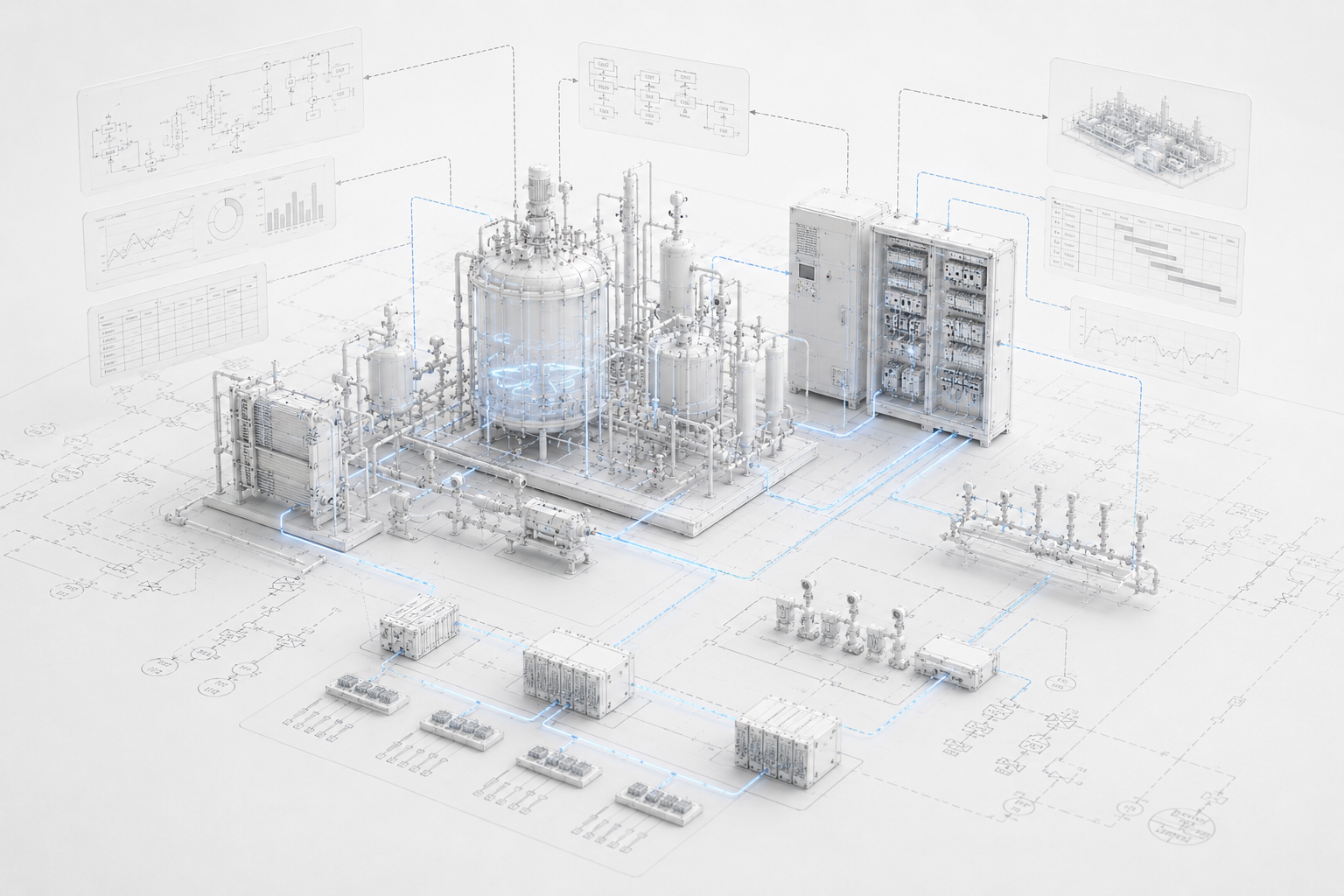

We design and implement DCS/PCS, PLC & SCADA, ISA-88 batch, and MTP-based automation solutions aligned with process requirements, operator needs, and GMP expectations.

We support legacy migrations, platform upgrades, and brownfield modernization while maintaining production continuity and reducing technical risk.

We provide lifecycle support for automation systems, including troubleshooting, improvements, commissioning support, operator training, and long-term maintenance.
How it works
Process automation projects are delivered through a structured engineering approach that connects process understanding, risk-based design, control system design, software implementation, testing, and commissioning.
1. Design based on process, operational, safety, and security requirements
We begin by translating process, equipment, user, regulatory, SHE, and information security requirements into a clear automation design. Relevant risk analyses are used to identify hazards, critical functions, and required safeguards. This includes defining the control architecture, batch strategy, system boundaries, operator interactions, and integration points with surrounding systems.
2. Implementation with structured and secure control logic
The solution is implemented using scalable control structures, standardized software design, and clear separation between process control, operator interface, batch execution, and system integration. Information security principles are considered in areas such as system architecture, access control, communication, and integration design. This supports maintainability, future expansion, and consistent operation across equipment and production areas.
3. Integrated testing, commissioning & qualification support
Testing and commissioning are treated as an integrated part of the implementation, not a separate final activity. We support FAT, SAT, commissioning, troubleshooting, operator training, and validation-related activities, including verification of relevant safety, risk-control, and security requirements, to reduce project risk and ensure the system is ready for regulated production.


Reference project
Implementation of a SIMATIC PCS 7 batch solution integrated with MES, enabling fully automated production workflows and improved traceability.
The solution replaced manual processes, reduced operational risk, and ensured compliance with GMP requirements.
Technologies & platforms
Platform agnostic and experts in leading automation platforms, ensuring high-quality, reliable, and regulatory-compliant solutions.
Control systems
Control systems
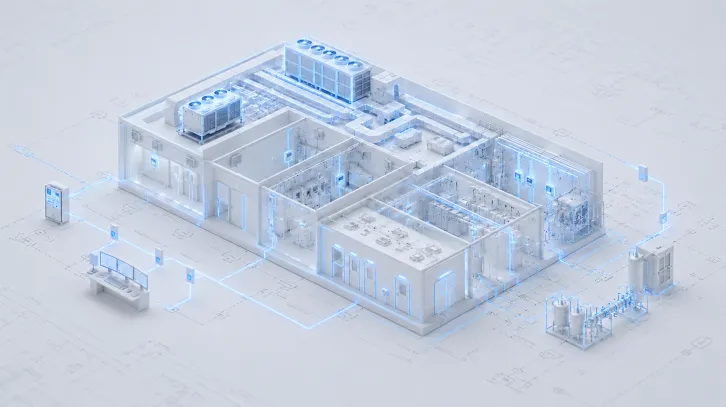
We work with leading process control platforms for regulated manufacturing, including Siemens SIMATIC PCS 7, Siemens PCS neo, Emerson DeltaV, and ABB 800xA. Our experience covers system architecture, configuration, batch control, operator interfaces, testing, and commissioning.
PLC & SCADA
PLC & SCADA
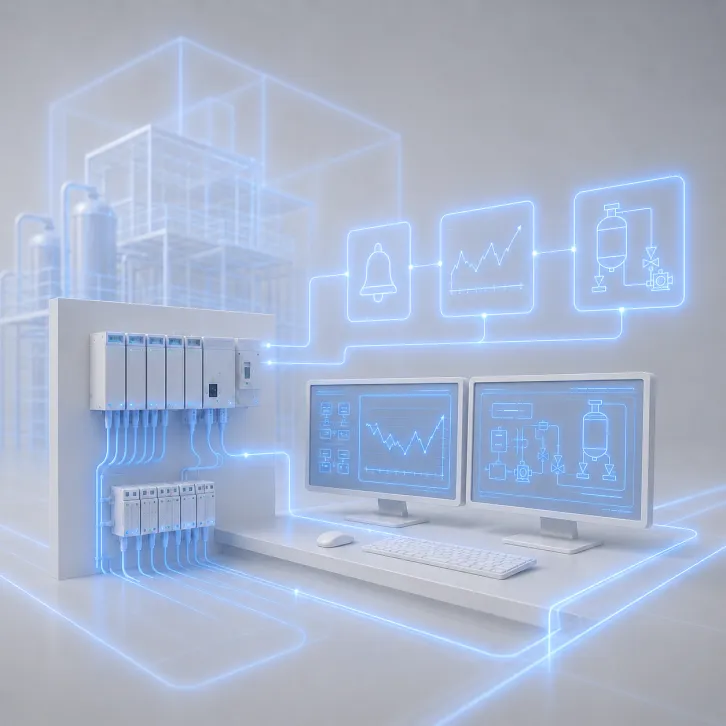
We design and implement PLC and SCADA-based automation solutions using platforms such as Siemens TIA Portal, Rockwell, Beckhoff, AVEVA InTouch, and iFIX. These systems are applied where flexible machine control, utility automation, or supervisory control is required.
Integration & communication
Integration & communication
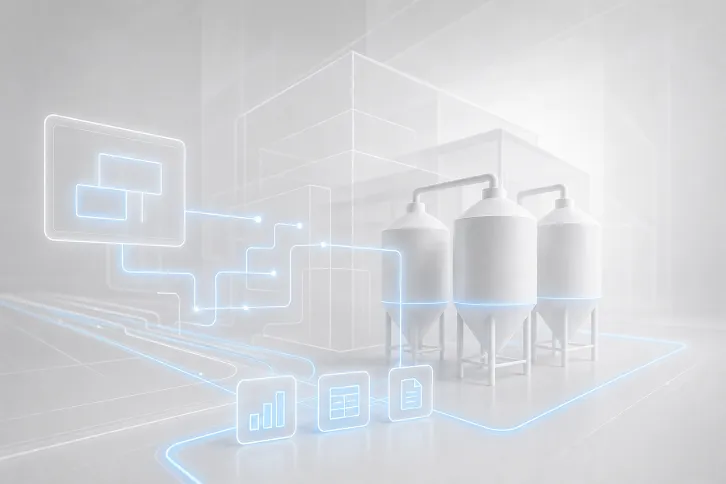
We support integration between automation systems and surrounding digital platforms using technologies such as OPC UA, REST APIs, middleware, industrial communication protocols, and historian interfaces. This enables reliable data exchange between control systems, MES, LIMS, ERP, and reporting environments.
Hear from our specialist
What distinguishes a well-designed PCS 7 batch solution from a basic implementation?
"A strong solution reflects the underlying process design, allows for flexibility, structures recipes for maintainability, and integrates cleanly with Historians, MES and other surrounding systems. This reduces commissioning risk and supporting long-term scalability."
Niklas Andersson
- SENIOR AUTOMATION ENGIEER & PCS7 SPECIALIST

Talk to our sales representative for more information
FAQ
FAQ
How does process automation support pharmaceutical manufacturing?
Process automation enables repeatable process execution, controlled operator interaction, consistent batch handling, and reliable process data collection. In pharmaceutical manufacturing, this supports product quality, operational efficiency, and GMP-compliant production.
How do you ensure compliance in automation projects?
We apply structured engineering, documentation, testing, and validation support aligned with GMP and GAMP 5 expectations. Compliance is considered throughout design, implementation, FAT, SAT, commissioning, and handover.
Can automation upgrades be implemented in existing facilities?
Yes. Brownfield upgrades are planned around existing operations, system dependencies, production windows, and validation requirements. Where needed, we use phased migration, parallel testing, simulation, and planned cutover strategies to reduce operational risk.
Which platforms do you work with?
We are platform-agnostic and work with major automation platforms including Siemens PCS 7, PCS neo, TIA Portal, Emerson DeltaV, ABB 800xA, AVEVA InTouch, iFIX, Rockwell, and Beckhoff.
What makes KeyPlants’ process automation approach different?
Our strength lies in combining automation engineering with process understanding, GMP experience, and system integration capability. This allows us to design solutions that are technically robust, maintainable, and aligned with the facility’s operational needs.


Get in touch
Please complete the form to the right and a representative will be in touch with you shortly.