
MES/MOM & eBR
Designing and implementing manufacturing execution, operations management, and electronic batch record solutions for regulated production environments.
MES, MOM, and electronic batch records provide the execution layer between production planning, quality systems, and shop floor operations. In pharmaceutical and regulated manufacturing, this layer is critical for controlling batch execution, enforcing process steps, capturing production data, and maintaining traceable records.
KeyPlants supports MES/MOM and eBR projects from concept and requirements definition through design, configuration, integration, testing, and qualification support. The work includes digital batch execution, master batch record structure, system interfaces, operator workflows, electronic signatures, exception handling, and bespoke batch reporting based on process historian data.
Typical challenges include replacing paper-based batch records, integrating MES with control systems and LIMS, managing data integrity requirements, and creating maintainable workflows that operators can execute reliably in production. The objective is to reduce manual handling, improve traceability, and support efficient batch review without compromising GMP expectations.
What we deliver
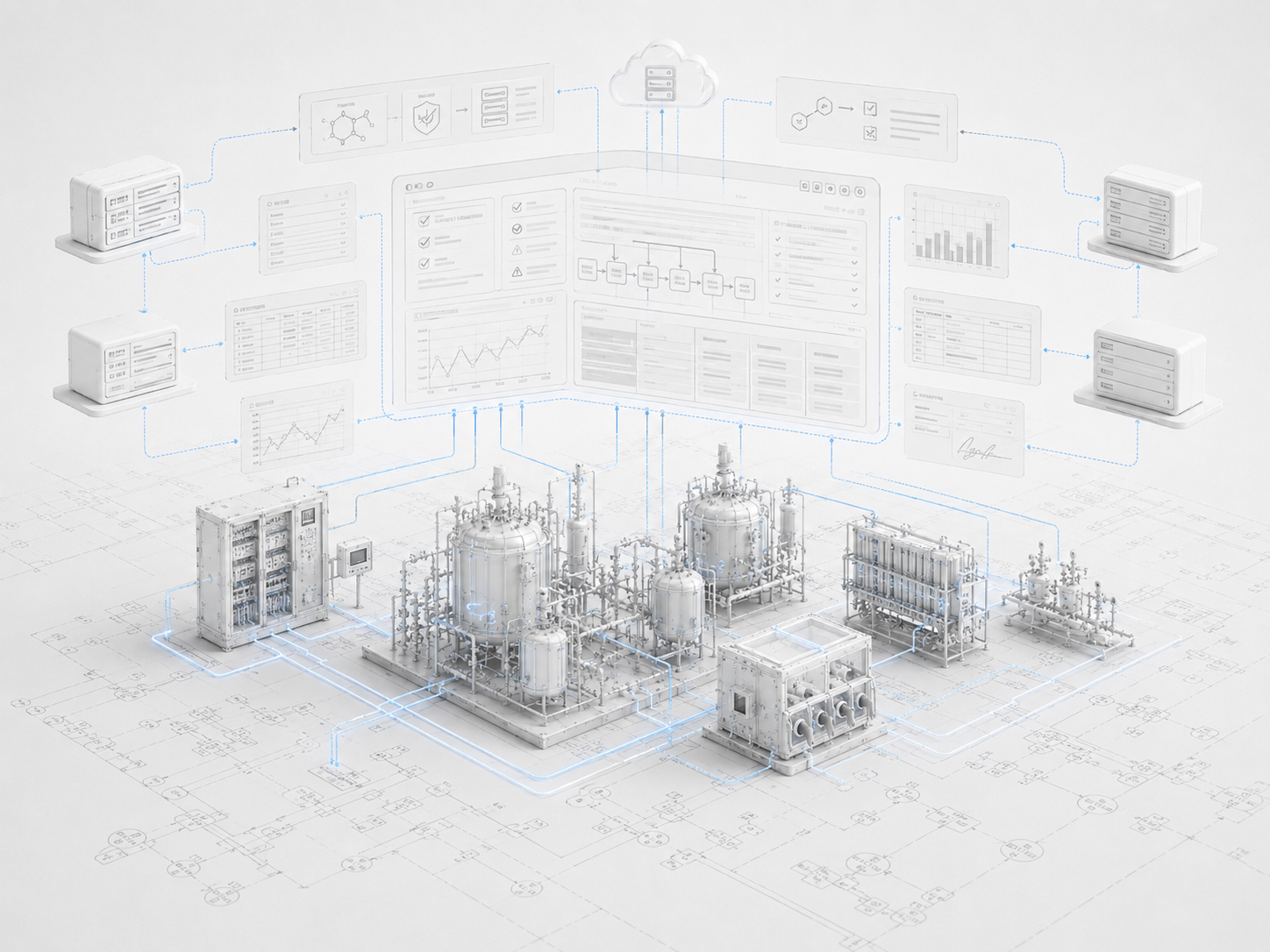

KeyPlants designs MES, MOM, and eBR solutions based on process requirements, GMP expectations, operator workflows, master data structures, and integration needs across manufacturing and quality systems.

We support integration between MES, batch control systems, LIMS, ERP, QMS, and process historians using structured interfaces, message handling, middleware, and controlled data exchange mechanisms.

We develop electronic batch records, review-by-exception structures, and bespoke batch reports using MES data, historian data, SQL logic, and production context relevant to GMP documentation.
How it works
KeyPlants approaches MES/MOM and eBR delivery as an engineering task that connects process understanding, system design, data integrity, and practical production execution.
1. Define execution scope and batch structure
The work starts by defining which production activities belong in MES/eBR, which remain in control systems, and which are handled by surrounding systems. Process steps, roles, materials, equipment, sampling points, data capture needs, and review requirements are translated into a structured execution model.
2. Configure workflows, records, and integrations
Master batch records, operator instructions, electronic signatures, exception logic, and system interfaces are configured or developed according to the agreed design. Integrations are implemented with clear ownership of data, message flows, error handling, and synchronization between MES, LIMS, ERP, historians, and automation systems.
3. Test, verify, and prepare for regulated operation
Testing covers workflows, interfaces, calculations, data capture, audit trails, electronic signatures, and reporting outputs. KeyPlants supports FAT, SAT, commissioning, documentation, and validation activities so the system can be introduced into production with controlled risk and clear handover to operations.

Talk to our sales representative for more information

Reference project
As part of a legacy control system upgrade, KeyPlants implemented Siemens Process Historian 2024 and developed custom batch reports for two pharmaceutical production lines. The reports transformed archived process data into structured batch documentation, improving access to batch-specific evidence and strengthening data integrity for production review.
Technologies & platforms
MES/MOM and eBR solutions are built around execution platforms, structured records, validated interfaces, and controlled production data flows.

MES & batch platforms
MES & batch platforms
We work with and offer solutions with TULIP, PAS-X, Siemens Opcenter Execution Pharma and AVEVA MES.
Integration & interfaces
Integration & interfaces
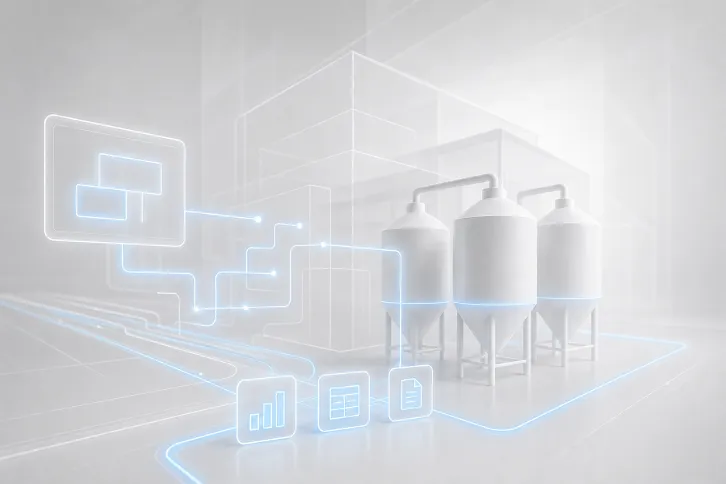
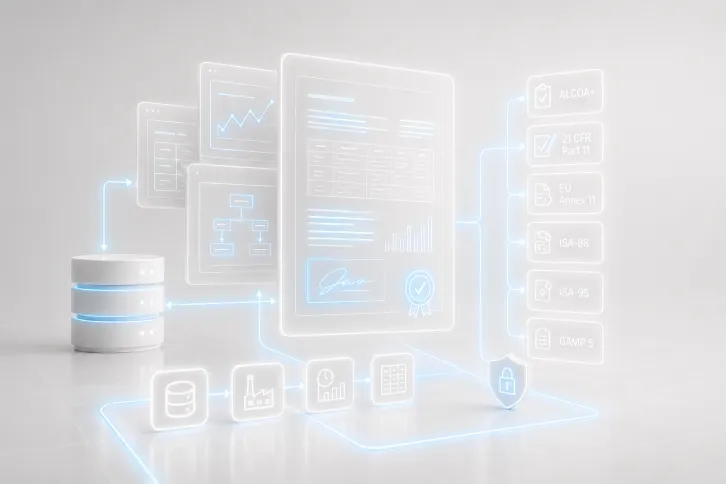
We offer integrations between MES, LIMS, ERP, QMS, process historians, and batch control systems using REST APIs, web services, XML and JSON message structures, middleware, SQL/database interfaces.
Reporting & records
Reporting & records
FAQ
FAQ
What does an MES/MOM system do in pharmaceutical manufacturing?
MES/MOM manages production execution between planning systems and shop floor systems. It supports batch execution, material tracking, operator workflows, equipment status, production data capture, and integration with quality and enterprise systems.
How is eBR different from a paper batch record?
An eBR structures batch execution digitally, captures data electronically, applies role-based controls, manages electronic signatures, and supports review-by-exception. A paper record documents execution after or during the process, but provides less system-enforced control.
Can MES/eBR be implemented in a brownfield facility?
Yes. Brownfield implementation is possible, but requires careful interface mapping, migration planning, operator involvement, and phased testing. Existing automation systems, historians, LIMS, ERP, and paper workflows must be assessed before defining the target scope.
How does KeyPlants support compliance and validation?
KeyPlants supports validation-ready engineering through requirements definition, functional specifications, traceability, test planning, FAT/SAT support, data integrity considerations, and documentation aligned with GMP expectations, GAMP 5, 21 CFR Part 11, and EU Annex 11.


Get in touch
Please complete the form to the right and a representative will be in touch with you shortly.